This is lovely and amazing.
In a series of watercolors, an artist attempts to capture the essence of the San Francisco Public library. I particularly like the sketches of each floor, where it's clear that different things are happening in different places, and that all of them qualify as legitimate library activities. An excerpt:
Monday, May 16, 2011
New Places for you to Work (edited to give credit where due)
Joan Lippincott and Sarah Watstein came to talk to us in the library this past semester about learning spaces. We were shown photos of a variety of library spaces in a wide range of places. I was particularly inspired by a picture of a picnic table tucked under a chalkboard in a friendly outdoor nook. And I thought, "we can do that."
Thanks to the quick work of our facilities staff, when you come back for the summer sessions, or even if you are not coming back until the Fall, there are new workspaces waiting for you! There are now chalkboards in the outdoor area just outside of Peets. We are lucky in Charlotte to have nearly year-round outside-friendly weather. Enjoy!
Wednesday, May 4, 2011
Questions for you! Just in time for finals...
...but in this case, there's no such thing as a wrong answer.
We'll have easels up soon, so you can write your answer hard-copy if you like, but I thought I'd put the questions here in case someone (you, perhaps) might be inspired to answer them here.
We're trying to get at what people think about the library, and have been presented with some questions that might help us do that.
Please answer in the comments:
We'll have easels up soon, so you can write your answer hard-copy if you like, but I thought I'd put the questions here in case someone (you, perhaps) might be inspired to answer them here.
We're trying to get at what people think about the library, and have been presented with some questions that might help us do that.
Please answer in the comments:
1. 1. If the library as it is now were a car, what car would it be? What car would the library be if the library were everything we wish it to be?
2. 2. If the library were to be a song, which song?
3. 3. If the library were an actor/actress, who would it be?
Tuesday, April 26, 2011
Mobile Devices and how people use them
This is a great snapshot of mobile devices usage at UW--I believe the stats are campus-wide, not just in the library.
If you go to the library.uncc.edu URL on your smartphone, you'll see that we've got the beginnings of a mobile site. In thinking about developing the new mobile site, we need to think about library things that people are likely to do on their phone (as opposed to on their laptop, in person, etc). That means knowing the sorts of things that people already do on their phones (or tablets).
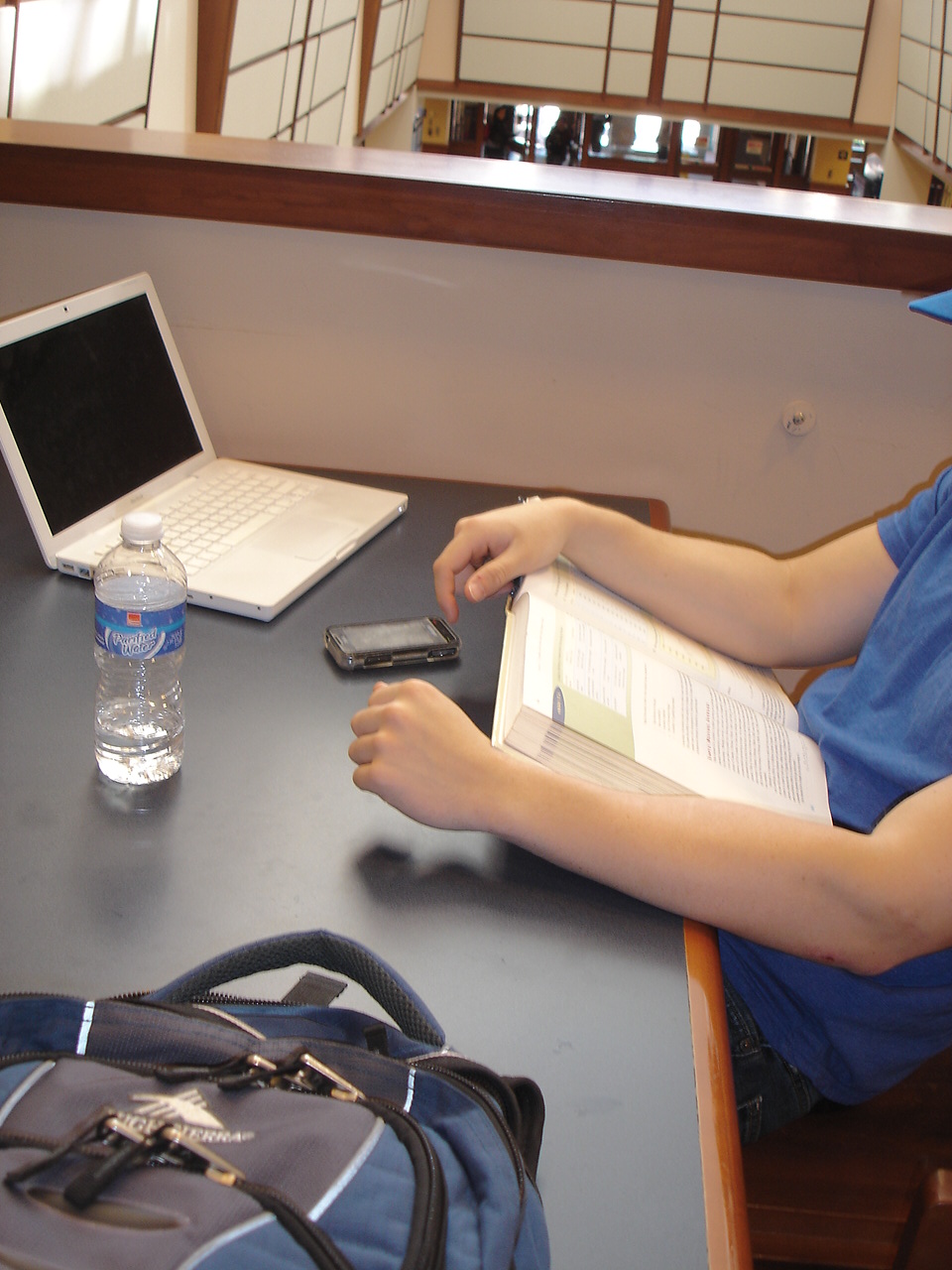
I see tablets and smartphones (as well as laptops and regular cell phones) as a part of student workspaces in the library all of the time.
Like this:
Do you use your smartphone to Google things? What kinds of things? What kinds of work do you do on your tablet (iPad, or other)? Is it different from work you do on other kinds of computers (laptops, desktops)? Are you Macs or PCs, and what difference does that make in the kinds of work you can do in the library and/or with library digital resources?
If you go to the library.uncc.edu URL on your smartphone, you'll see that we've got the beginnings of a mobile site. In thinking about developing the new mobile site, we need to think about library things that people are likely to do on their phone (as opposed to on their laptop, in person, etc). That means knowing the sorts of things that people already do on their phones (or tablets).
I see tablets and smartphones (as well as laptops and regular cell phones) as a part of student workspaces in the library all of the time.
Like this:
Do you use your smartphone to Google things? What kinds of things? What kinds of work do you do on your tablet (iPad, or other)? Is it different from work you do on other kinds of computers (laptops, desktops)? Are you Macs or PCs, and what difference does that make in the kinds of work you can do in the library and/or with library digital resources?
An Anthropologist in the Libraries of LA
No, not me. No field trips for me, yet.
But I was sent this link to a great interview of the new head of the Library Foundation in LA--this gentleman is a trained anthropologist who did fieldwork in the Amazon, as well as many other non-library related jobs (among them, running the Sundance Institute, and while he did that, starting the documentary division of that film institute).
He clearly sees the LA libraries as community resources, not just (as if they ever were) dusty book repositories. He describes libraries as "21st century spaces."
So do we, here at Atkins. More and more of our collections are digital, in part because that is one of the best and most effective ways we can increase our patron access to world-class collections. In thinking about space, we are thinking about the work you need to do, which includes the need to use books but also includes computers, digital materials, and eventually, information formatted in ways we haven't even imagined yet.
What does your library mean to you? Is Atkins "your library?" Or is it the public library back home? Or in your neighborhood here in Charlotte? Where are you when you are "in the library?" Are you here in the building? Or at home, "in" our website?
But I was sent this link to a great interview of the new head of the Library Foundation in LA--this gentleman is a trained anthropologist who did fieldwork in the Amazon, as well as many other non-library related jobs (among them, running the Sundance Institute, and while he did that, starting the documentary division of that film institute).
He clearly sees the LA libraries as community resources, not just (as if they ever were) dusty book repositories. He describes libraries as "21st century spaces."
So do we, here at Atkins. More and more of our collections are digital, in part because that is one of the best and most effective ways we can increase our patron access to world-class collections. In thinking about space, we are thinking about the work you need to do, which includes the need to use books but also includes computers, digital materials, and eventually, information formatted in ways we haven't even imagined yet.
What does your library mean to you? Is Atkins "your library?" Or is it the public library back home? Or in your neighborhood here in Charlotte? Where are you when you are "in the library?" Are you here in the building? Or at home, "in" our website?
Friday, April 22, 2011
Zombie Library!!
Alright, this graphic novel approach to library orientation is fantastic.
Who's going to write one for Atkins?? Anyone??
Tuesday, April 12, 2011
A Google A Day--Trivia Questions to help investigate how people use google to search for information
So Google has a self-described "anthropologist of search," and his blog describes his new "A Google a Day" trivia game.
The game itself appears to be the point of much of the coverage--although at least one journalist sees the game as a potential search tool in and of itself. Hardly anyone points out that what this game will actually do is allow Google to gather information on how people do search. (this is not a secret--Google says that's what they're doing) I wonder if they will share with the rest of us what they learn, or just plow their knowledge back into Google. I wonder if we could ever do something similar with the way that people search for information in our library.
People who know far more about search technology than I do doubtless have much to say about Google's efforts. What do you think about their using a trivia game to gather information?
The game itself appears to be the point of much of the coverage--although at least one journalist sees the game as a potential search tool in and of itself. Hardly anyone points out that what this game will actually do is allow Google to gather information on how people do search. (this is not a secret--Google says that's what they're doing) I wonder if they will share with the rest of us what they learn, or just plow their knowledge back into Google. I wonder if we could ever do something similar with the way that people search for information in our library.
People who know far more about search technology than I do doubtless have much to say about Google's efforts. What do you think about their using a trivia game to gather information?
Subscribe to:
Posts (Atom)